Trying to find different ways to show the family names that I am interested in researching. Shows my surnames back as far as my 3x great grandparents.

Trying to find different ways to show the family names that I am interested in researching. Shows my surnames back as far as my 3x great grandparents.
Joseph Weston, nephew to Zacharias who you can read about here and also a railway employee, sounds like a man you could trust. In 1935 The Hastings and St Leonards Observer reported that he found an abandoned attache case whilst patrolling the line between Etchingham and Roberstbridge stations and handed it in. It was reported that the case belong to Alice Cole, district nurse for the area, who had had it stolen from her car. The car was parked two doors up from Robertsbridge Station. Interesting for me, my grandparents, my mother and my aunt were living in that house and they were all great friends of hers and this is the first time I had heard what her first name was!!!
Joseph is a first cousin twice removed to me and was born in April 1878 and died in 1972, another long living Weston! His parents were John Weston and Mary Ann Humphrey. He married Mary Maria Relf in 1904 and they had 7 children; 6 girls and 1 boy. The men were well and truly outnumbered!!
In 1901 he was a platelayer working on the railways and living at Etchingham and could well have been working in the same gang as is uncle Zacharias. In the 1939 Register, at the start of World War 2, he was recorded as a railway lengthsman and living at Rother View in Etchingham.

Joseph Weston is the man on the left. In the front row next to him is Ernie Wells, his son in law. On the opposite end on the right is Farmer Croft. On the back row on the far right is Will Eastwood. Can you identify the others? (Credit to Etchingham in Bye-gone Days Flickr site here.)
Platelayers and lengthsmen were responsible for a section of railway track and it could be dangerous work. They needed to be careful they were standing clear from passing trains and not slip onto the tracks when working or not get crushed between carriages or trucks if stationery trains started moving.
What a different way of viewing this and makes for something that might even interest those family members who aren't currently interested.

United Kingdom censuses are held every 10 years. The census records relate to the persons whereabouts on the date given below:
1801 - 10th March Tuesday
1811 - 27th May Monday
1821 - 28th May Monday
1831 - 30th May Monday
1841 - 6th June Sunday
1851 - 30th March Sunday
1861 - 7th April Sunday
1871 - 2nd April Sunday
1881 - 3rd April Sunday
1891 - 5th April Sunday
1901 - 31st March Sunday
1911 - 2nd April Sunday
1921 - 19th June Sunday (publication date 1st January 2022)
1931 - 26th April Sunday (publication date 1st January 2032)
1939 - 29th September World War II National Registration (publication date 1st January 2040)
1941 - no census taken due to World War II.
1951 - 8th April (publication date 1st January 2052)
1961 - 23rd April (publication date 1st January 2062)
1971 - 25th April (publication date 1st January 2072)
1981 - 5th April (publication date 1st January 2082)
1991 - 21st April (publication date 1st January 2092)
2001 - 29th April (publication date 1st January 2102)
2011 - 27th March Sunday
2021 - 21st March Sunday
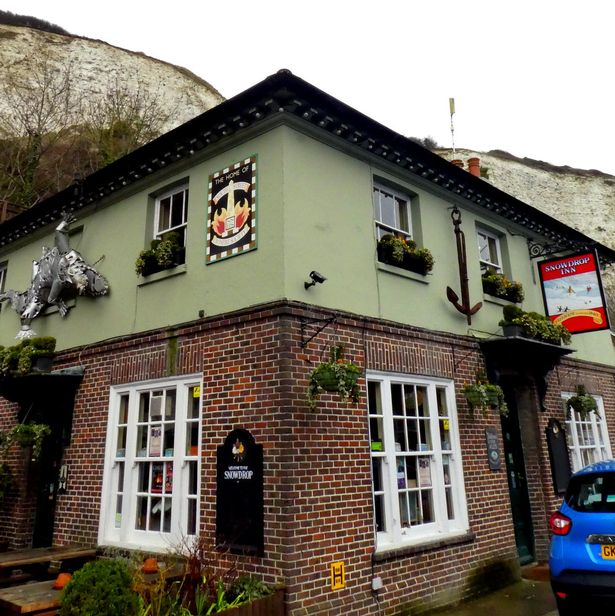
I don't have many ancestors that come from the Lewes area but I worked there for 15 years and this disaster is part of the heritage of the town.
The
deadliest avalanche in British history took place, not in the
mountains of Scotland or Wales as you may expect, but in 1836 in the
town of Lewes, Sussex, just a few miles from the south coast of
England.
During
the winter of 1836/7 Britain suffered some of its worst weather ever
recorded, with freezing temperatures, heavy snow and gale force
winds.
On
Christmas Eve 1836 a huge storm blew up over southern England. Heavy
snowfall and gale force winds combined to produce blizzards and
massive snow drifts.
The
town of Lewes is situated on the River Ouse, surrounded by the hills
of the South
Downs.
By Christmas night 1836 the north-easterly blizzard had built up a
deep layer of snow on the sheer edge of one of these hills, Cliffe
Hill. The great overhanging mass of snow was reportedly around 20
feet deep.
Boulder
Row, a row of seven workers’ cottages on South Street, stood at the
foot of Cliffe Hill. These houses were ‘poor houses’ and were
owned by South Malling Parish.
It
soon became obvious to passers-by that the cottages were in danger
from this huge overhang of snow. They alerted the residents and
advised them to move out until the snow had melted. The residents
refused, even when on 26th December, a large fall of snow from the
clifftop fell onto a nearby timber yard, destroying it and sweeping
it into the River Ouse.
The
following day at 10.15am the inevitable happened; the huge weight of
snow fell, swamping the cottages of Boulder Row below.
How
many people were in the cottages at the time is unknown, but
contemporary reports indicate that fifteen people were inside when
the avalanche struck.
According
to witnesses, the cottages were physically swept into the road by a
huge wave of snow, leaving nothing to be seen except an enormous
white heap. A mammoth rescue effort lasting seven hours managed to
save seven people, but eight others perished from suffocation under
the weight of snow.
The
fatalities included people with the family names Barnden, Bridgman
and Geer, while survivors included a young labourer Jeremiah Rooke, a
middle-aged woman named Fanny Sherlock (or Sharlock) and a
two-year-old child, Fanny Boakes, believed to be Sherlock's
granddaughter (the 1841 census records two people matching these
names and ages living at the same address in South Street)
The white dress Fanny Boakes was wearing when she was rescued is on
display in the Anne of Cleves House museum in Lewes, along with a
contemporary painting of the tragedy.
Their
names are recorded on a commemorative tablet, funded by public
subscription, on the inside wall of South Malling parish church, one
mile away, where the funeral and burial took place. A
fund was set up to provide financial aid to the survivors and
bereaved families.
Today
a pub called the Snowdop Inn stands on the site of Boulder Row. The
inn was built in 1840 and named in commemoration of the disaster.
Zacharias was my great great uncle. He was born 1 March1857 in Etchingham and died in 1933. His parents were Samuel Weston (1806-1894) and Sarah Newick (1818-1897) He married Emily Jane Kemp in 1887 Zacharias and Emily Jane had 9 children of which 7 were still living in 1911. He died a widower, aged 76, in 1933 and left behind 5 daughters and 2 sons. He had been a railwayman for 45 years.
He was a railway platelayer in 1881 and lived with his parents in Garners Cottages, Etchingham. In 1891 he was living with his wife and family at Church House Cottages, Etchingham and was still a platelayer. In 1901 he was living at Hammerden Cottage, Stonegate, Ticehurst and was still a platelayer. In 1911 he was a railway labourer but that could still have been a platelayer. He was a Sapper in the Royal Engineers during World War 1..